Project-based Learning (PbL) meets Applied Data Science: An innovative learning format between training and practice
As a university, we are faced with a challenge: How can we train students with the future-oriented skill profiles that companies are urgently seeking? The solution is called project-based learning, or PbL. This practical and application-oriented learning format bridges the gap between university and the world of work. It is now part of our Master’s programme “Applied Information and Data Science” at HSLU. What PbL actually is, what it can do and who benefits from it, and how, is explained below.
Shortcuts:
What is PbL | Why using PbL | Benefits from PbL | Info-Events | Programme-Information | Contact | Professional Data Science Portraits

What is Project-based Learning?
Project-based learning is a new form of collaboration between education and practice. It enables students to test and develop their skills directly in real and challenging business projects over an extended period of time. By working together on concrete projects, students acquire and deepen not only professional knowledge, but also important soft skills such as teamwork, problem solving and communication. The focus is always on the idea of bringing the skills taught in universities more closely into line with the skills required in practice.
“Project-based learning is definitely a win-win concept for everyone involved,” says Prof. Dr. Andreas Brandenberg, Data Strategist, Founder and Head of the MSc in Applied Information and Data Science at HSLU. “We are very proud to offer such a groundbreaking learning format, which not only creates a continuous project stream in our study programme, but is also able to innovate learning and teaching as a whole.”
PbL projects are characterised by the following features:
– PbL projects address a wide range of practice-relevant issues and provide direct benefits to different stakeholders.
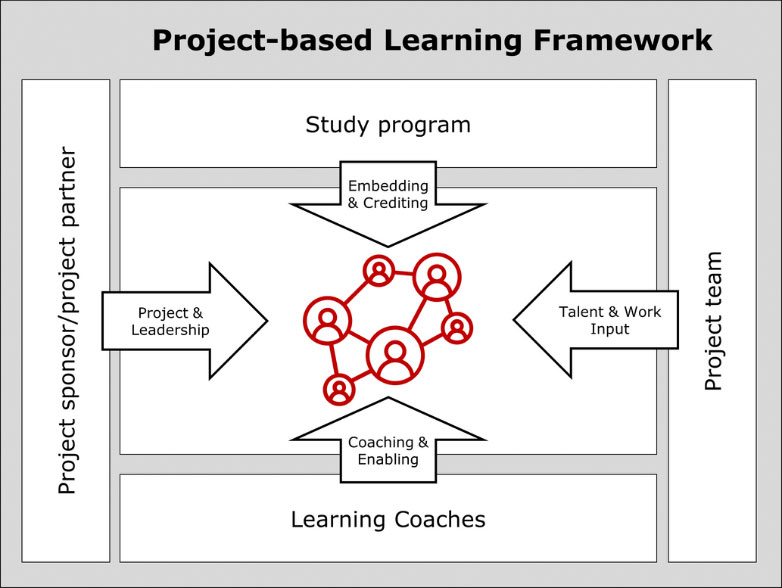
– The initiative for a PbL project can come from anyone involved in the project: practice partner, learning coach, student team or education partner. This ‘quartet’ forms the PbL framework.
– PbL projects are challenging, open to solutions and provide enough space for creative solutions.
– The project duration can vary if companies work on the same problem with a rotating or constantly changing team of students.
“Companies, for example Migros, can work with a constantly changing team of students on a given question and task. The decisive factor is that the project leads to a demonstrable development of our students’ competences”, says Andreas Brandenberg.
What makes PbL different from other forms of learning?
It differs from classical knowledge transfer in that the students acquire the learning content entirely within the framework of practical projects. The practical projects are not only objects of practice, but the actual place of learning itself. The education partner supports the project teams through active coaching throughout the duration of the project.
“Through project-based learning, our students experience the complexity of a real data project, develop their problem-solving skills and, last but not least, retain the freedom for self-motivated learning,” says Prof. Dr. Andreas Brandenberg.
Fun Fact: The PbL learning format has not yet been implemented with the desired consistency at any other university. The HSLU is taking the first step.
How can we imagine PbL in concrete terms?
Project-based learning takes place in a standardised learning environment. We speak of a “learning box” as a collaborative, i.e. cross-institutional and cross-disciplinary learning environment. It assigns a specific role to all project participants:
– The project sponsors or practice partners contribute the task, the necessary project infrastructure and the project management.
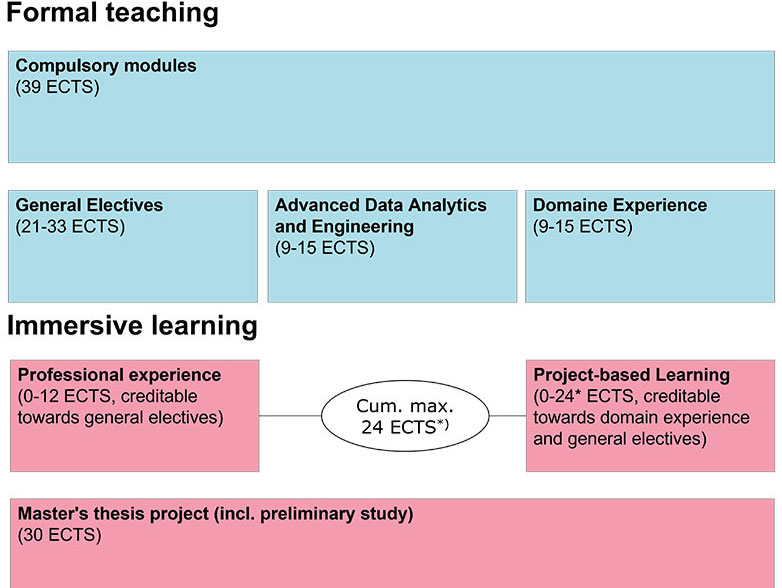
– The student teams contribute their talent, creativity and work input. A team consists of a maximum of three students who can work on PbL projects worth a maximum of 12 ECTS credits during one or more semesters (also during the lecture-free period).
– The learning coaches support the student teams in terms of content and pedagogy and develop the competences in the team.
– The education partners integrate the PbL framework into their curricula and regulate the recognition of PbL projects as coursework.
Why do we use project-based learning?
We live in a world of digital transformation. Rapid developments in data and AI technologies are creating entirely new job profiles or fundamentally changing existing ones. It is becoming increasingly difficult for companies to find professionals with the skills they need.
The interplay between technological developments and the need for skilled graduates is also a major challenge for universities. Knowledge is seen as a scarce resource, and know-how on how companies and organisations can monetise the potential of data and AI technologies is in high demand.
However, educational institutions are increasingly unable to generate this knowledge on their own and, unlike companies, often lack the financial resources for the necessary infrastructure. Close educational cooperation between academia and industry therefore seems sensible and necessary – PbL makes this possible.
The benefits of project-based learning at a glance
1. Students benefit from PbL through:
– Proven practical experience under real project conditions in interdisciplinary teams,
– Credit transfer and the possibility of including project results in the Master’s thesis.
– Access to interesting potential employers,
– Interaction with peers from other programmes or disciplines.
2. Education partners (colleges, universities) experience the following benefits through PbL:
– Cost-effective “production” of project modules,
– Access to attractive practice partners for students and teachers,
– Possibility of cooperation with other study programmes,
– Visibility of study programmes in practice.
3. Practice partners (companies and organisations) benefit from:
– Resources for potentially interesting project ideas at an early stage,
– Use of the creative potential of young people in rotating, constantly renewing teams,
– Reduction of development risks,
– Access to experts (learning coaches),
– Access to an interesting talent pool, including the discovery of potential future employees.
4. Learning coaches gain the following benefits through PbL:
– Access to interesting practice partners,
– Collaboration in challenging practical projects,
– Perfection of personal coaching, empowerment and facilitation skills,
– Possibility to initiate own PbL projects,
– Working with motivated student teams.
Interested?
For more information about project-based learning at HSLU, please contact Prof. Dr. Andreas Brandenberg, Data Strategist, Founder and Head of Programme of the Master of Science in Applied Information and Data Science.
Info-Events
Start your career with the MSc in Applied Data Science and AI now!
Join one of our online Info-Events:
Monday, 2 November 2026 (Online, English)
Friday, 27 November 2026 (Online, German)
Monday, 11 January 2026 (Online, English)
Programme Information | Contact | Info-Events
Interested in the MSc in Applied Data Science and AI?
Visit our Info-Events. We look forward to meeting you!
Please contact us if you have any questions about your studies:
Tel.: +41 41 228 41 30
Email: master.ids@hslu.ch
Further links to the programme:
→ Generalist profile
→ Career profiles and study insights
→ Our Lecturers
→ Course structure and modules
→ Working and studying
→ Admission and registration
→ FAQ