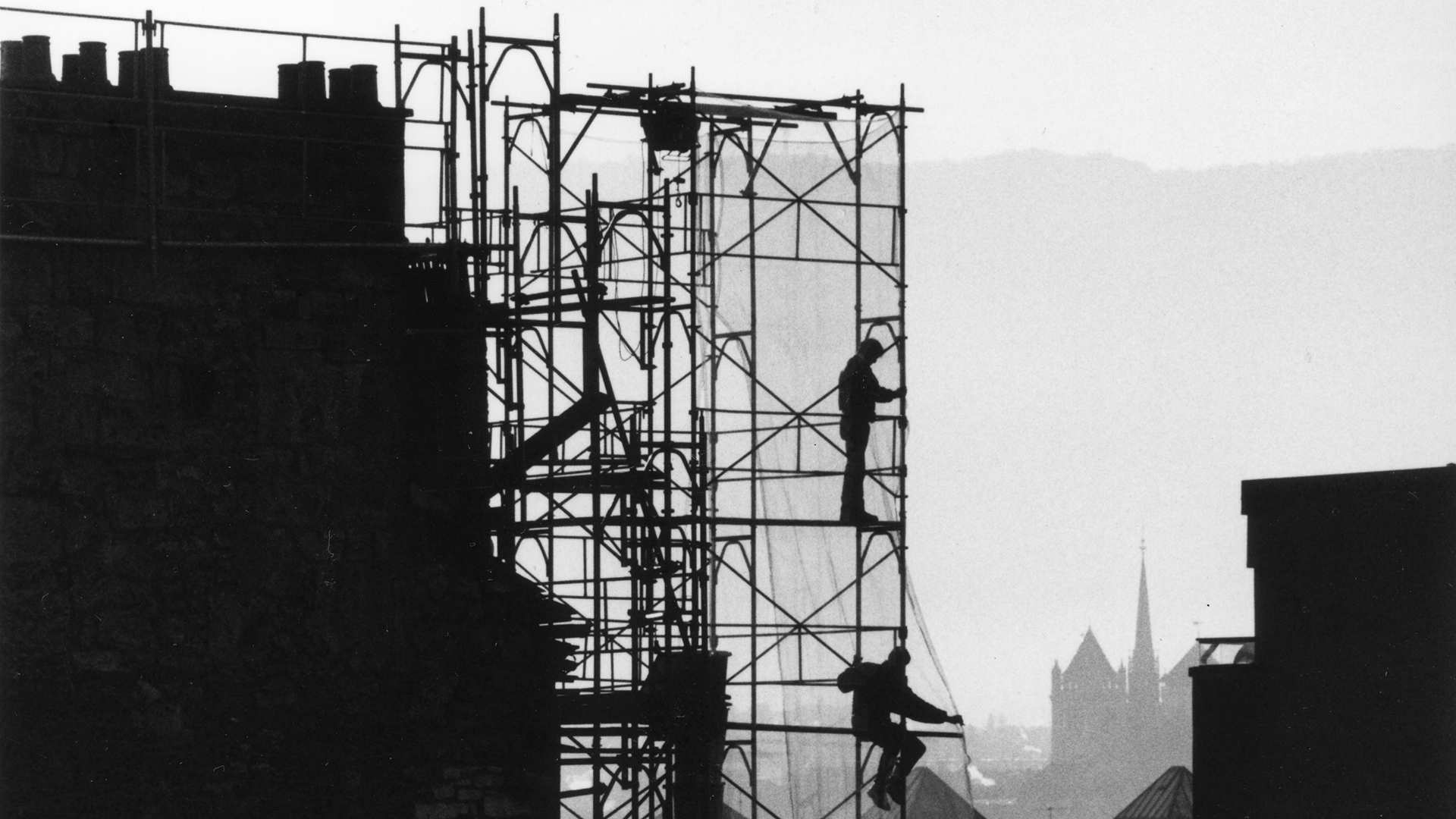
 Arbeiter auf Baugerüst, 1998. Bild: Interfoto Genève/F 5031-Fb-1005.
Modulverantwortung: Torsten Lange
Lehrteam: Heike Biechteler, Torsten Lange, Guest Lecturers
Designed Conditions: Architecture in The Political Economy of Production — Labor
Architecture and the production of the built environment more broadly are shaped by economic forces: land prices, labor markets, capital flows, and professional enterprise. Frequently rendered invisible, these forces profoundly impact what gets built, where, and for whom. Furthermore, these forces are typically understood as fixed constraints or external realities—unchangeable “givens” in the design process. This module challenges such naturalizations. Instead, it posits that these key factors of production are neither neutral nor inevitable, but designed conditions: socially and politically constructed, maintained, and contestable. Through critical investigation and speculation, the module equips students with tools to both understand and visualize how these dynamics operate—and to imagine alternative futures for architectural production.
The second semester foregrounds labor as a key yet often overlooked aspect of architectural production. Labor is not just a neutral input; it is actively shaped by tools, techniques, laws, contractual frameworks, standards, and professional norms. The semester examines how architectural work is organized in offices and on building sites, ranging from clerical routines and design protocols to construction practices and the roles of migrant or temporary labor. Special attention is given to legal arrangements among clients, architects, and contractors. New models of delivery, such as total or general contractor contracts, in which a single entity oversees the entire project (including design services in the total contractor model), promise maximum efficiency and minimal risk for the investor. However, these models also redistribute responsibility, restrict professional autonomy, and can create precarious working conditions. The module questions the distinction between intellectual and manual work and invites a critical reassessment of authorship, responsibility, and agency in architecture.
Events
Full-day sessions – input, seminar and coaching
Fridays (see dates below)
9:00–15:00, F-Nische or as announced
27.2.; 6.3.; 27.3.; 10.4.; 24.4.; 8.5.; 22.5.2026