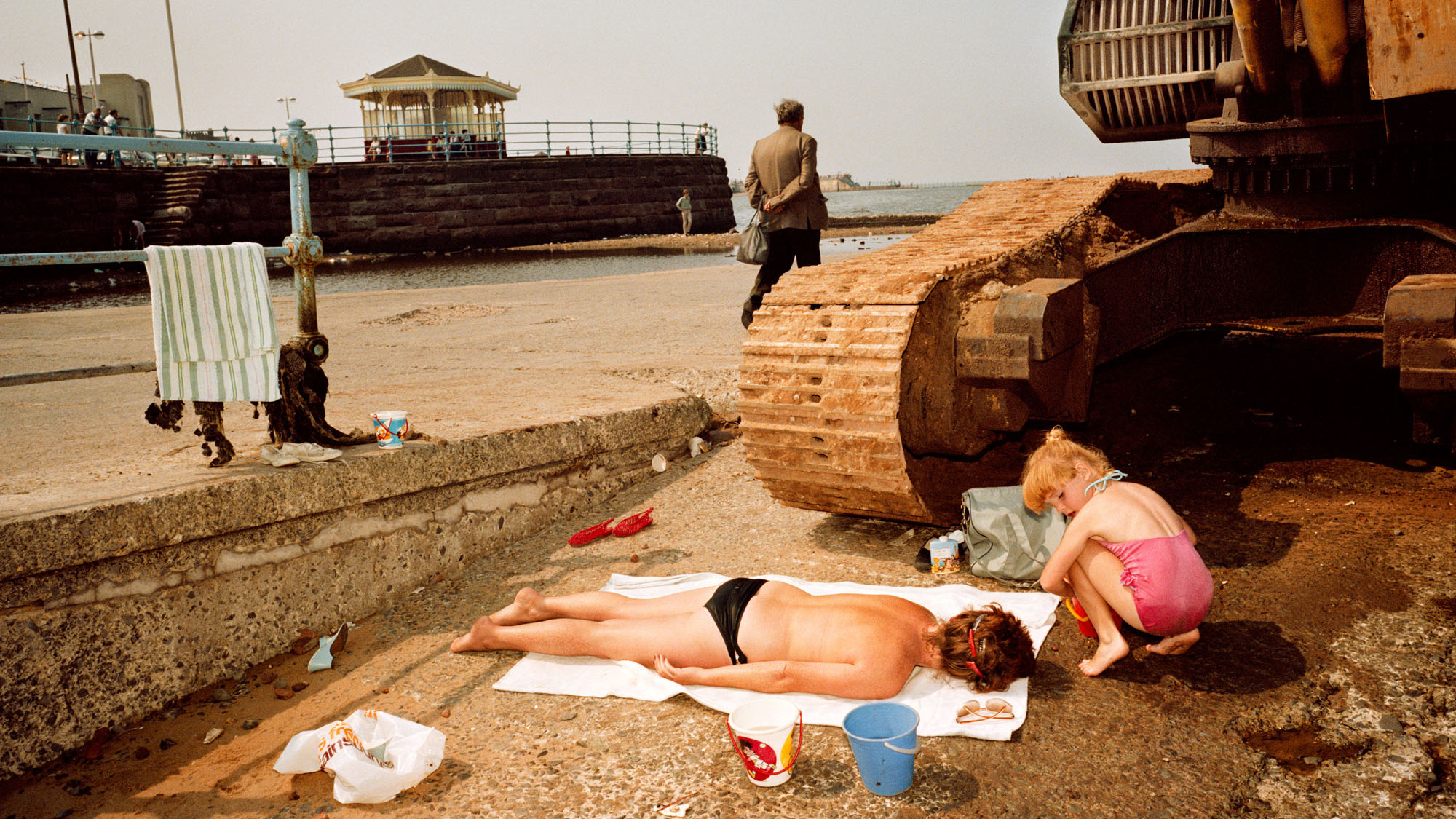
 GB. England. New Brighton. From 'The Last Resort'. 1983-85.
Modulverantwortung: Peter Althaus
Lehrteam: Felix Wettstein, Didier Balissat, Joni Kaçani, Céline Bessire, Matthias Winter
Assistants: Qendrim Gashi, Asiya Bella Sharipova, Olin Petzold
SACRED GROUND – AN ARCHITECTURE OF STAGING
This semester takes place in Saint-Maximin-la-Sainte-Baume and the surrounding Massif Sainte-Baume in Provence. The work builds on the legend of Mary Magdalene and an unrealized project by Le Corbusier, proposing a third, contemporary continuation of this still-unfinished narrative. In parallel, the InDepth module Escapes for Everyone examines postwar French tourism structures. Through shared inputs, a joint study trip, and continuous exchange between design and theory, productive synergies are anticipated.
NO VACANCY – GRAND COOPERATIVES
While the shiny Grand Hotels still dominate Lucerne’s silhouette, their golden era is long gone: the Bourgeoisie moved elsewhere, cheap consumption, commercial displays and temporary residencies moved in, shifting the place from grand to ordinary. Late Capitalism leaves the Grand Hotels as a manifestation of an outdated demonstration of power concentration, eventually opening opportunities for the speculation on their better future. Embracing permanent change as a condition of the Grand Hotels, we are testing the limits of their capacity as sites, structures and spatial configurations, inviting local housing cooperatives to take over and radically expand.
PERMANENT VACATION TEMPORARY OCCUPANCY: SPACES OF DOMESTICITY
Across Lucerne, vacant and underused office and logistics buildings stand as remnants of shifting economies and changing modes of work. Originally conceived as spaces of efficiency and production, they now open up questions about their future as environments of habitation. By accommodating diverse temporalities—from short-term stays and assisted living to student housing and permanent residences—these structures invite a critical rethinking of domestic typologies such as kitchens, bathrooms, and living rooms. Their transformation tests how former spaces of labor can be domesticated and reconfigured in response to both existing constraints and new forms of living.
Events
Mid-term Review
Thursday, 16.04.26
Final Review
Thursday, 25.06.26