
Olga
Terekhina
Career
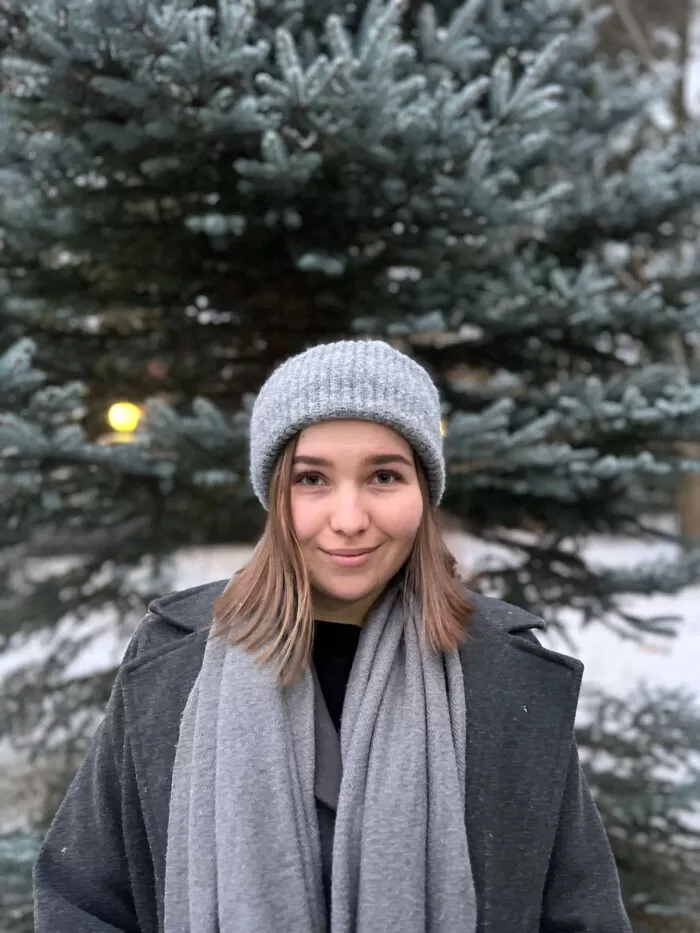
- Speak 3.5 languages
- Born in St Petersburg
- Moved to Switzerland in 2018 and lived here alone since then
- Graduated from College Champittet in Lausanne with an IB diploma in 2022
- Currently study Energy and Environmental Systems Engineering (EESE) in english language full time
Why did you decide to study engineering?
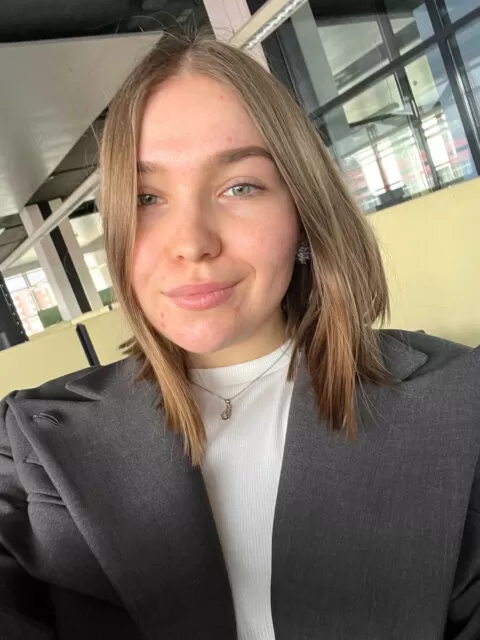
Since childhood, I’ve loved understanding how things work — why buildings stand, how we move through cities, how the physical world fits together. Math, physics and geography were my favourite subjects because they made the world feel explainable and exciting. I was also a very creative kid. My mum used to say I’d become a great architect — I loved designing things, imagining spaces, and I had a naturally structured mind. So architecture seemed like the obvious path. But while researching universities, I randomly discovered my current programme — and something clicked. It felt like the perfect mix of logic and imagination, structure and creativity. The deeper I looked into architecture, the more I realised it was almost too artistic for what I was craving. I wanted science, clarity, and the satisfaction of solving real problems — but still with room to create. Engineering with a creative, systems-thinking angle became the answer. It felt like finding a place where both sides of me — the logical and the imaginative — finally fit together.
What do you like about your studies or your work?
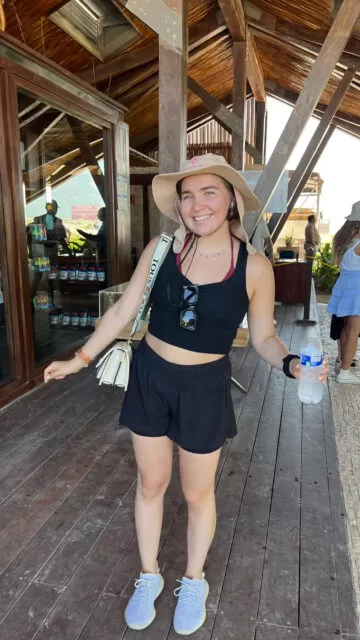
I love that my studies constantly push me outside my comfort zone. Many things that once intimidated me — group work, public speaking, languages, physics, even parts of math and biology, are now skills I actively get to practice and grow. This whole experience feels like my personal “try everything” era, where I challenge myself, experiment, and discover what truly excites me in the engineering world. My one-year internship at CSD Engineers opened my eyes to how diverse this field actually is. Engineering isn’t just sitting behind a computer; depending on your role, it can mean visiting construction sites, taking measurements, meeting clients, presenting ideas — and even thinking strategically from a business perspective. I really appreciate how many future paths my programme offers. I can move toward energy, environment, buildings, construction — or find a balance between desk work and on-site work. And the international aspect is incredible: I study in English, completed my internship in French, and I know I could work almost anywhere if I choose to. I also enjoy being exposed to many different disciplines, teaching styles and real-world companies. Visiting organisations in various fields gives me a clearer picture of what’s out there and helps me understand what I’m drawn to — and what I’m not. Every week feels like a new chance to learn more about myself and about the industry.
What advice would you give to women who are interested in studying engineering?
Don’t be intimidated by the word engineering. It’s a huge universe of possibilities — from environmental science to energy, mobility, buildings, innovation, and beyond. If the broad label doesn’t resonate with you, look deeper. You might find a specialisation that feels exactly right for your strengths and passions. Yes, the field has traditionally been male-dominated — but it’s changing fast. And it needs women. Throughout my studies, I’ve seen how mixed teams create clearer, more structured and more creative solutions. Diversity isn’t a buzzword; it genuinely improves the work we do. In my own experience — both in my programme and during my internship — I rarely felt out of place. And on the occasions where I was the only woman, I still felt heard. Your voice matters, and when you speak with confidence and clarity, people listen. Engineering is incredibly international. You meet people from different cultures, backgrounds and personalities — and in places like Switzerland, I’ve seen that knowledge, skills and attitude matter far more than gender. The skills you gain in engineering are powerful and widely transferable. If one area doesn’t fit you, there are many others to explore. Try, experiment, switch paths if needed — you’re not locking yourself into one narrow future. You’re opening doors. And please: don’t dim your personality. You don’t have to hide the parts of yourself that feel “too much” or “too feminine.” I go to work in a pink coat and still climb over construction sites when needed. You adapt to the situation, but you don’t need to stop being you. I love dancing, fashion, and travelling — and I also love solving technical challenges, debating ideas with my colleagues, and visiting project sites. You can be all of these things at once. Engineering is exciting, creative, meaningful — and women absolutely belong here.