
Anastasia
Stamatiou
Career
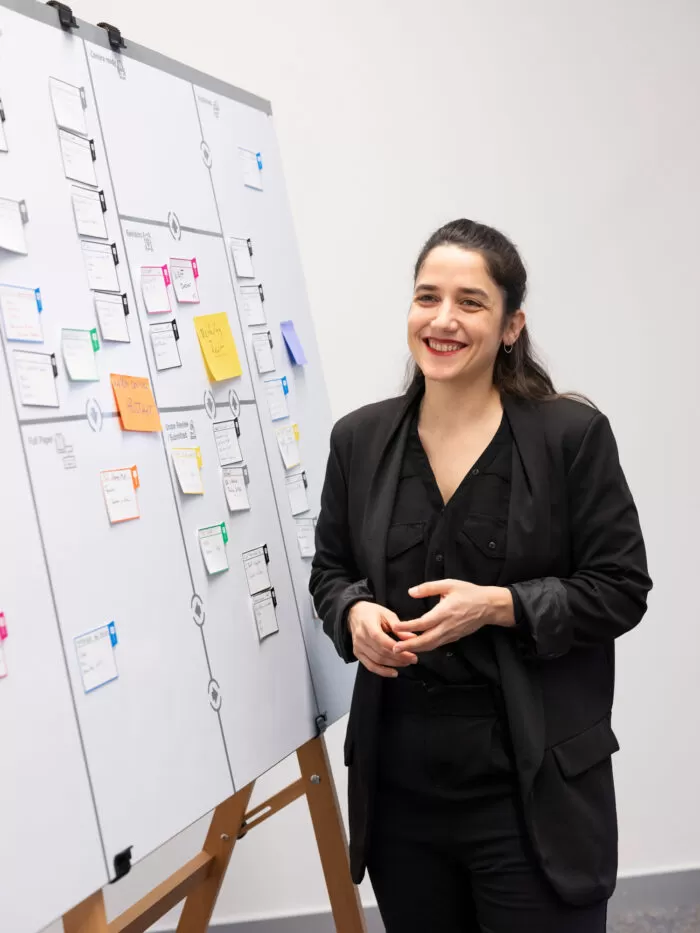
- 2008–2012: PhD at ETH Zurich (Renewable Energy Carriers) on solar thermochemical fuel production.
- 2014–2018: Senior researcher at HSLU on thermal energy storage (materials + system concepts).
- 2018–present: Research group leader at HSLU focusing on latent heat storage / phase-change materials.
- 2022–present: Director of the BSc program Energy & Environmental Systems Engineering at HSLU (teaching + curriculum development).
Why did you decide to study engineering?
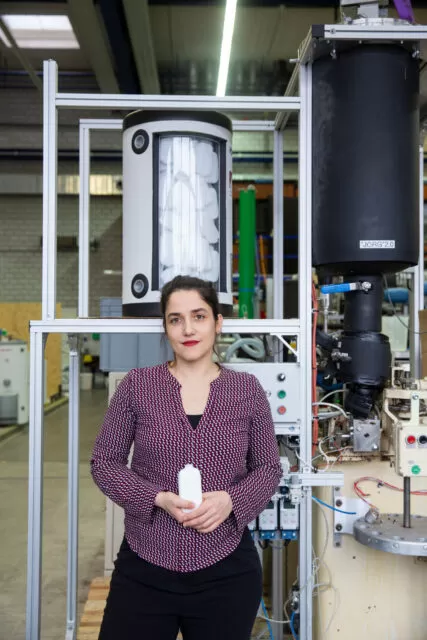
During my teen years I became deeply concerned about climate and environmental challenges. In my final year of high school I decided I wanted my career to contribute to solutions. Engineering felt like the best way to turn my motivation and affinity to science topics into real-world impact. That’s why I studied chemical engineering at the National Technical University of Athens, and later focused on renewable energy systems at ETH Zurich to work on technologies that can support a sustainable energy future.
What do you like about your studies or your work?
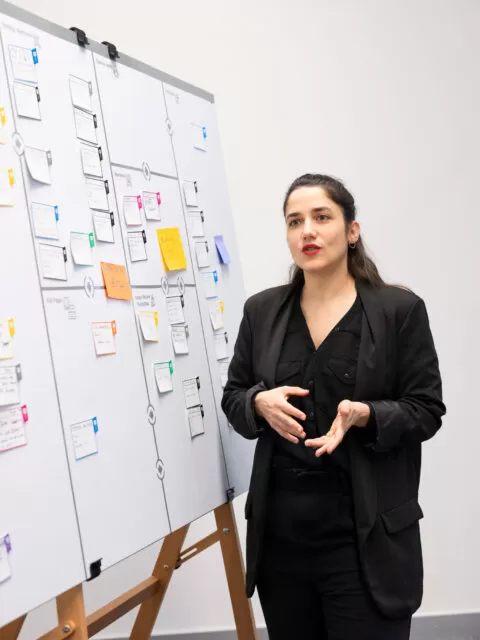
I love working at the intersection of materials and heat transfer—especially when it involves developing new energy technology concepts. Research often feels like investigative work: you are confronted with mysteries and incomplete evidence, and you have to untangle what’s really happening. Doing this together with colleagues is both engaging and fun. And the moment when a new idea turns into a working solution is incredibly satisfying. Above all, it’s meaningful to know that these solutions can support a more sustainable energy system. That purpose gives weight to every hour I invest in my work.
What advice would you give to women who are interested in studying engineering?
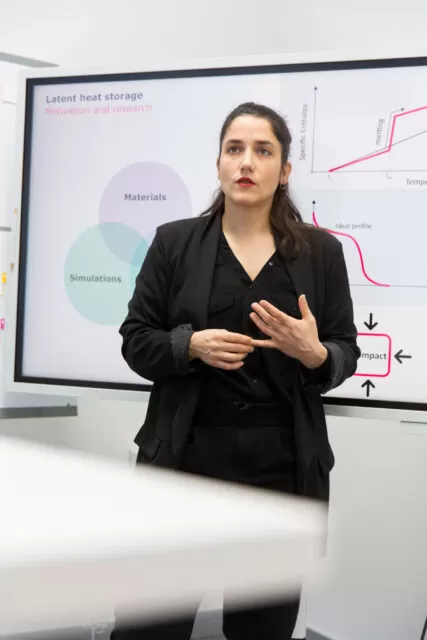
Choose a topic you genuinely enjoy and that gives you a sense of purpose. That motivation helps you through the demanding parts of an engineering degree. Find people who support you (peers, tutors, mentors), ask questions early, and get hands-on experience through internships, projects or labs. And if you ever hear voices (internal or external) saying engineering is “more for men,” ignore them. Engineering urgently needs diverse perspectives, and your contribution will matter!